UN experts have drawn up a ‘menu of options’ for financing sustainable development. What do they say?
Report: Where Next for Aid? The Post-2015 Opportunity
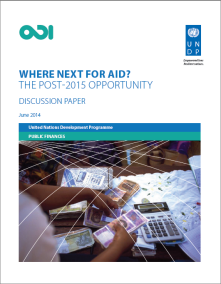
This joint ODI-UNDP paper looks at whether development aid will remain important in the post-2015 era, and asks how the old aid model should change in response to a dramatically new world and new sustainable development challenges.
Blog: Europe’s aid experience shows the value of supporting middle-income countries
EU aid to its member states has proved highly effective – so why pull the plug on countries such as India and South Africa?
Blog: Development aid: where to next?
What next for the global development aid effort? A major aid overhaul is needed, but what does this means in practice?
Blog: Changing the mindset on aid
What is ‘the future of aid’? The share of aid in global transfers is shrinking. The narrative that the developing world can now address its own challenges may sound appealing but misses something fundamental: in an interconnected world, there will ALWAYS be a need for international public transfers
Blog: The Caribbean’s silent debt crisis
Fresh approaches are needed to break the cycle of debt dependency
Blog: Cash in times of crisis
Since the 1980s, progressive financial deregulation – within and between countries – has led to increased instability and recurrent financial and economic crises. This is combined with volatility associated with more frequent and extreme environmental shocks. How should developing countries manage this increasingly volatile external environment? What should the international community do?
Blog: Paying for Post-2015
With the UN’s development goals up for renewal the question of financing is more important than ever
Report: Innovative Financing for Development: A New Model for Development Finance?

This Discussion Paper explores recent experiences with innovative sources of development finance in order to capture lessons learned for the more effective implementation of both current and future initiatives.
Report: Towards Human Resilience: Sustaining MDG Progress in an Age of Economic Uncertainty

How do macro-economic crises affect the world’s most vulnerable economies? What structural characteristics make some economies more susceptible to the harmful effects of such shocks? And what policies can help developing economies build resilience in the face of unpredictable economic change globally?
Report: Achieving Debt Sustainability and MDGs in SIDS: The Case of the Maldives
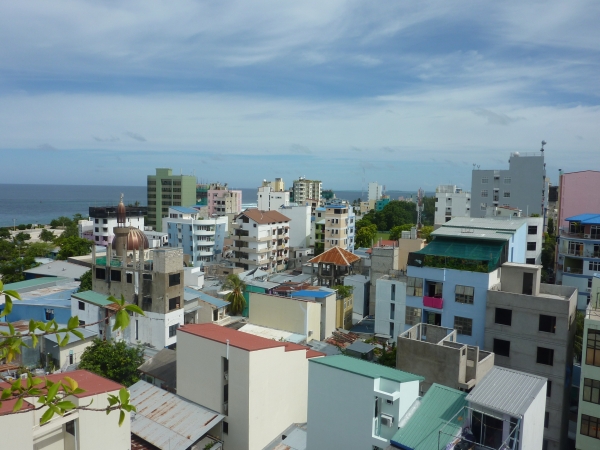
This paper explores the rapid increase in public debt in the Maldives over the last five years and assesses the possible development impact. It looks at the main drivers and possible policy solutions to the problem.
Report: Achieving Debt Sustainability and the Millennium Development Goals in Small Island Developing States

This discussion paper explores critically high levels of public debt and debt service across many small island developing states. It asks to what extent debt may be hampering progress towards poverty reduction and the MDGs and puts forward a series of policy measures to support SIDS reduce their public debt burdens.
Report: Jamaica’s Debt Exchange: A case study for heavily indebted middle-income countries

This Discussion Paper examines the Jamaica Debt Exchange Programme, and asks whether the initiative will help release additional funds for poverty reduction and restore debt sustainability to the island. The debt exchange will release over US$500 million in extra resources in 2010 but the government’s debt position remains fragile.
Report: Taming the vultures: Are new measures enough to protect debt relief gains?
The actions of so-called vulture funds – or speculative investors in the debt of distressed companies or sovereign states – have grabbed international media headlines. What can be done to tackle the problem in the long-term?
 Gail Hurley